
A Future Without Malaria

In 2022, over 600,000 people died from malaria—76% of whom were children. Malaria is one of the leading causes of child mortality worldwide, and nearly every minute, a child under 5 dies from the disease. And as global temperatures continue to rise, the mosquitoes that carry malaria may thrive even further, exacerbating the crisis.
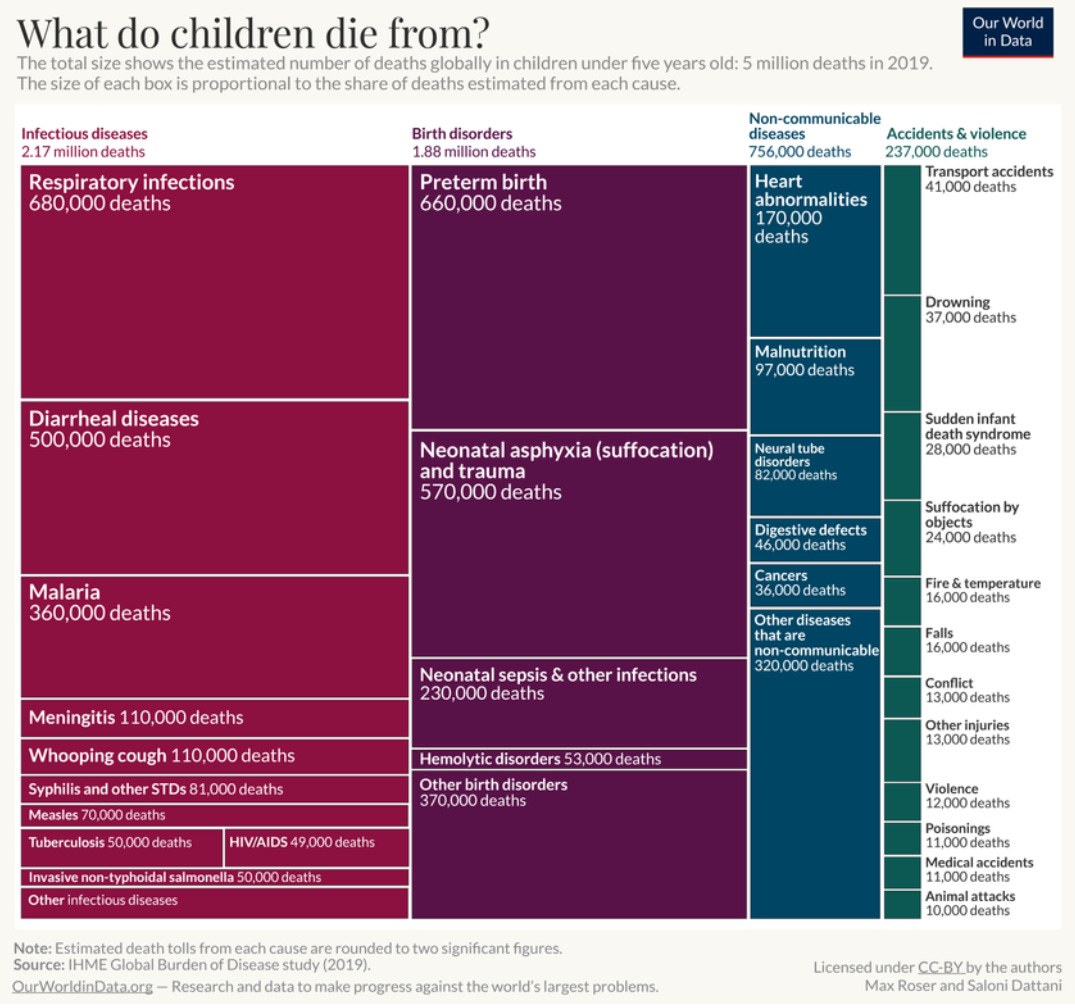
Given these terrible facts, it would seem nearly impossible to find grounds for optimism. Yet, over the last couple decades, the world has made immense strides in fighting the disease, and recent developments suggest we are on the cusp of a new era, in which the beginning of widespread vaccination could lead to an end to malaria.
In 2000, the UN created the Millennium Development Goals, which included a commitment to combatting AIDS, malaria, and other diseases. Since then, malaria deaths have dropped over 25%, with the percentage of malaria deaths occurring in children falling from 87% to 76%. 25 countries that were malaria endemic in 2000 have had 0 indigenous cases of malaria in the past 3 years, and 12 of them have been certified malaria free. Since the turn of the century, 11.7 million malaria deaths have been averted. That’s almost one life saved every minute over the last 20-odd years.
One of the biggest reasons for this decline in malaria mortality has been the widespread adoption of malaria nets. In 2000, only 2% of children under 5 slept under Insecticide Treated Nets (ITNs). That number is now nearly 60% in sub-Saharan Africa, where over 90% of malaria deaths occur. Since 2012, UNICEF has delivered more than 275 million Long Lasting Insecticide Nets (LLINs), a type of ITN, and the cost of these nets has declined from $4/unit in 2012 to fewer than $2 now.
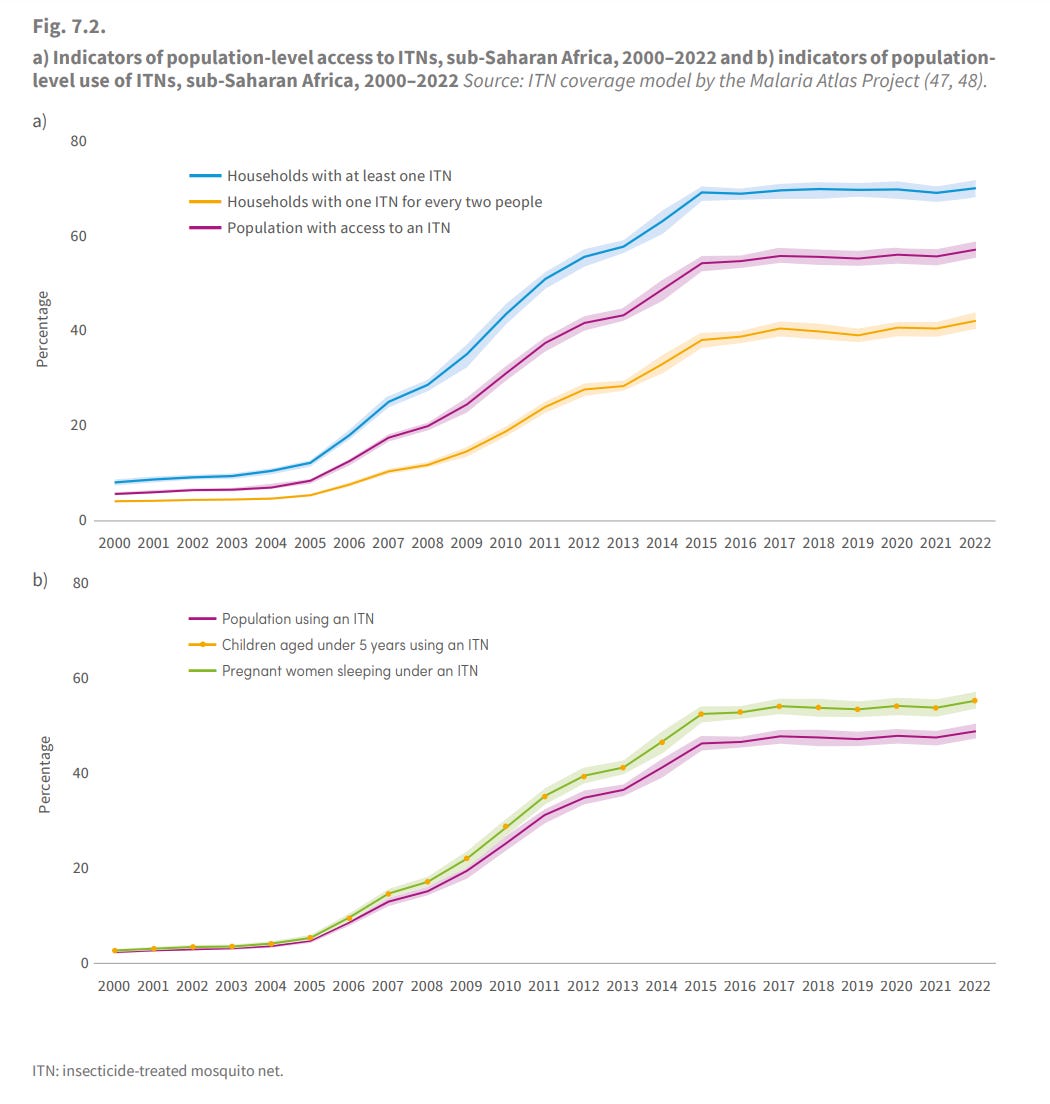
Malaria nets are incredibly effective; a study found that ITNs were responsible for 68% of averted malaria cases in sub-Saharan Africa. And LLINs, which last up to 3 years—much longer than the standard ITN—have been found to reduce malaria incidence by over 50%. Recently, in response to mosquitoes’ increased resistance to insecticides, WHO approved new nets, which reduce child malaria incidence to nearly half that of a standard LLIN.
In addition, the use of seasonal medical chemoprevention (SMC)—which involves administering monthly doses of antimalarial drugs to children under 5—has exploded from 200,000 children treated in 2012 to 49 million today, including 25.5 million in Nigeria. SMC is very effective, with studies finding that it decreases uncomplicated and severe cases of malaria in children under 5 by 75%.
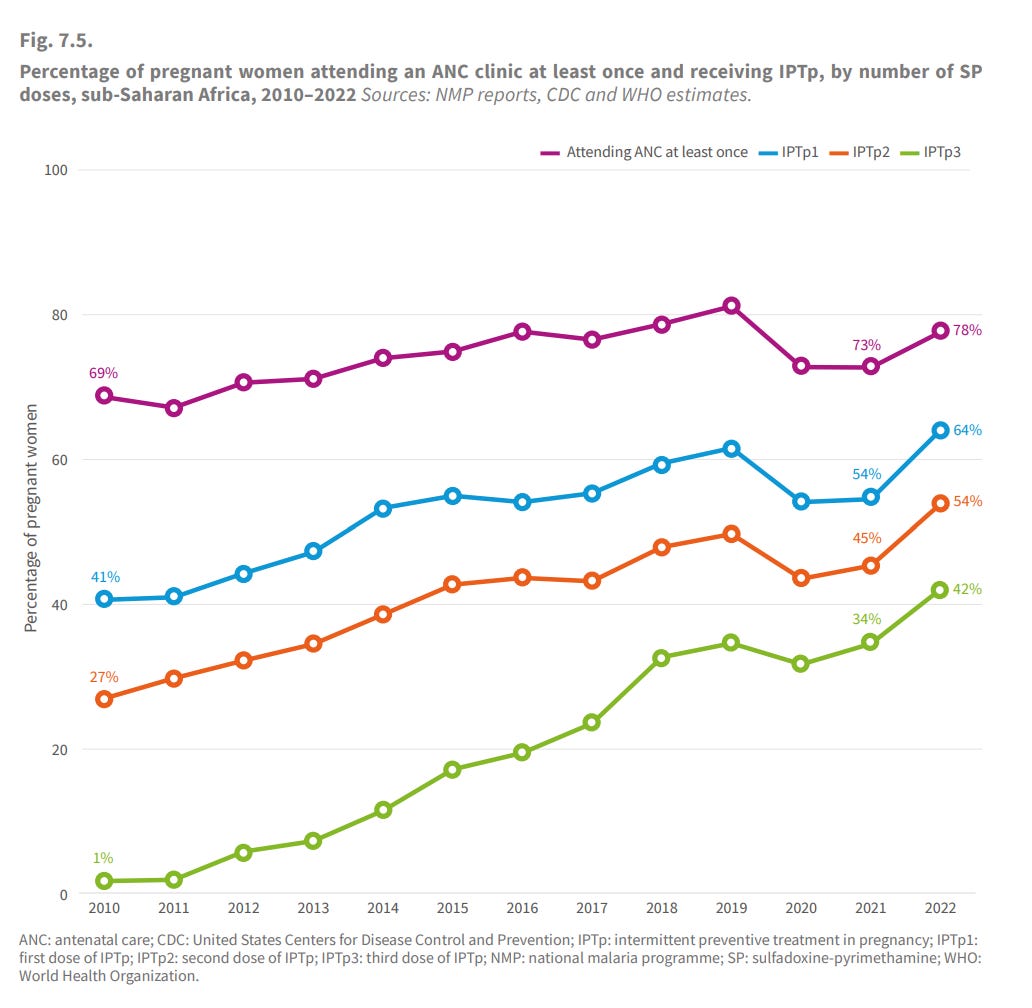
Over the past decade, the use of Intermittent Preventative Treatment in Pregnancy (IPTp), which involves providing pregnant women with an antimalarial drug up to three times before pregnancy, has increased rapidly. 35 countries have adopted the treatment, and in 2022, the percentage of pregnant women receiving one, two, or three doses of the drug reached all time high. These drugs reduce the risk of mothers contracting malaria, as well as decreasing the chance of low birth weight in babies.
Other preventative measures have also played a role in the fight against malaria, including indoor residual spraying—a highly effective treatment whose high cost has limited its scalability—rapid diagnostic tests, and artemisinin-based combination therapy.
While these prevention strategies and treatments are all effective, the development and recent regulatory approval of two antimalarial vaccines is a transformative advancement and the greatest reason for optimism. In 2019, the RTS,S malaria vaccine was rolled out in pilot projects in Ghana, Kenya, and Malawi, where it was administered to more than 2 million children and it reduced toddler deaths by 13% and severe malaria by 22%.
In 2021, RTS,S became the first malaria vaccine to be approved by WHO for broader use. Eight countries now offer the vaccine, and by 2026, 18 million doses will be sent to 12 African countries. In total, over 30 countries have expressed an interest in the vaccine.
In October 2023, WHO approved a second vaccine, R21, which is both cheaper and more effective than RTS,S. It was found to reduce malaria cases by 75%, making it the first vaccine to reach WHO’s goal of 75% efficacy. The Serum Institute of India, which helped develop R21, has the capacity to manufacture 100 million doses a year, and experts believe between the two vaccines there will be enough malaria vaccines for all children who need them.
On May 24, another milestone was reached, as the Central African Republic became the first country to receive doses of R21.
Efforts to combat malaria and other disease have also suffered from the lack of local manufacturing of treatments, as 95% of the active pharmaceutical ingredients and 70% of all medicines used in Africa are imported. However, in more good news, a vaccine factory is being built in Ghana, and Gavi, the Global Vaccine Alliance, recently announced funding dedicated to creating a vaccine manufacturing industry in Africa. This is a significant step toward realizing Africa’s goal of producing 60% of required vaccine doses on the continent by 2040.
The current state of malaria worldwide is horrific, and challenges abound in the fight to eradicate this deadly disease. However, now more than ever, there is cause for hope. The global community has proven that it can make significant progress against malaria, and scientists continue to innovate and research preventions and treatments that are astonishingly effective. The new vaccines are the latest and most promising reasons to believe that in the not too distant future we will live in a world in which malaria, like smallpox, has been eradicated.