
All The Time In The World

We all need more time. Since the dawn of humanity, we have searched for more time to do as we wish. The last two hundred years have been the story of our success. While all are familiar with our rapid improvements in life expectancy, a less heralded change has taken place as well: not only do we live longer, but we have more free time in our daily lives than ever before.
Until the Industrial Revolution, peasants made up between 70 and 90% of all people alive. Most owned small holdings, and spent their lives in substantial toil, with men forced to farm their own land and contribute unpaid labor for their lord. Trendy claims that peasants worked less than modern workers have been debunked; the main advocate of the view that peasants only worked 150 days a year now thinks the real number was twice that.
Unsurprisingly, women’s labor demands were even worse. Two women in a family of six would have to spend 46 hours per week on textile production just to hit subsistence level clothing demands; to do just a little better would require 93 hours. That’s in addition to numerous other tasks, including nursing (which took up an average of 40% of a woman’s life from fifteen to forty), cleaning, cooking, household budgeting, and more.
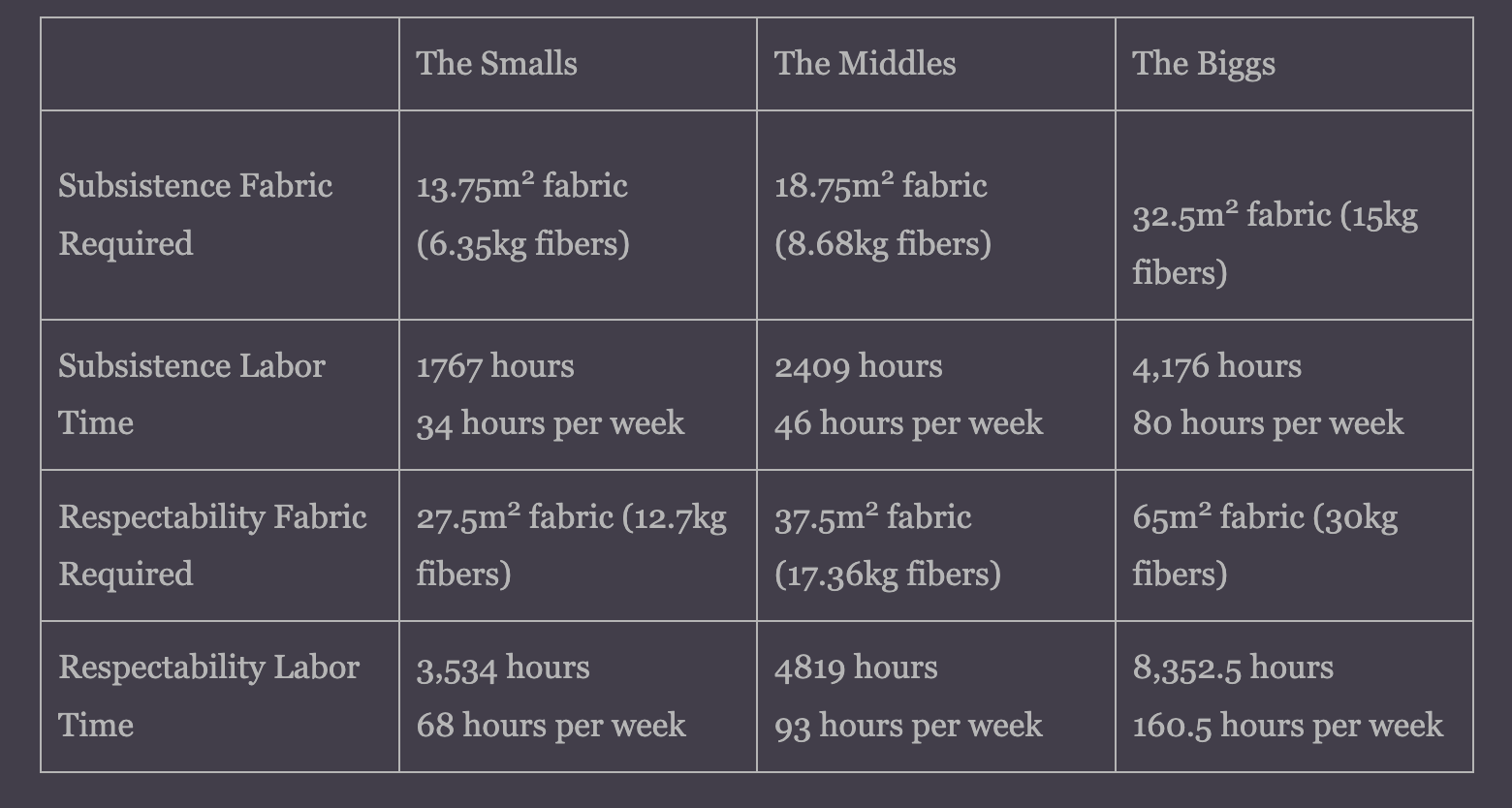
Work-life balance wasn’t much better after the Industrial Revolution. Two separate estimates taken in the 1880s and 1890s found that manufacturing workers were working around 60 hours a week, an improvement from roughly 70 in the 1830’s. The workers at the Triangle Shirtwaist Factory—famous for the fire that killed 146 people, including girls as young as 14—racked up about 80 hours a week at the beginning of the Twentieth century. The Eight-Hour-Day movement persisted for over a century in the US before the Fair Labor Standards Act standardized the forty hour week, plus overtime pay for surplus hours in many industries.
While the average hours worked have not declined substantially since then, technological improvements have likewise expanded available free time for people. Over the course of a few decades, the availability of technologies like refrigerators, freezers, stoves, and washing machines reduced the amount of household work required. No longer did all of Monday need to be spent on laundry.
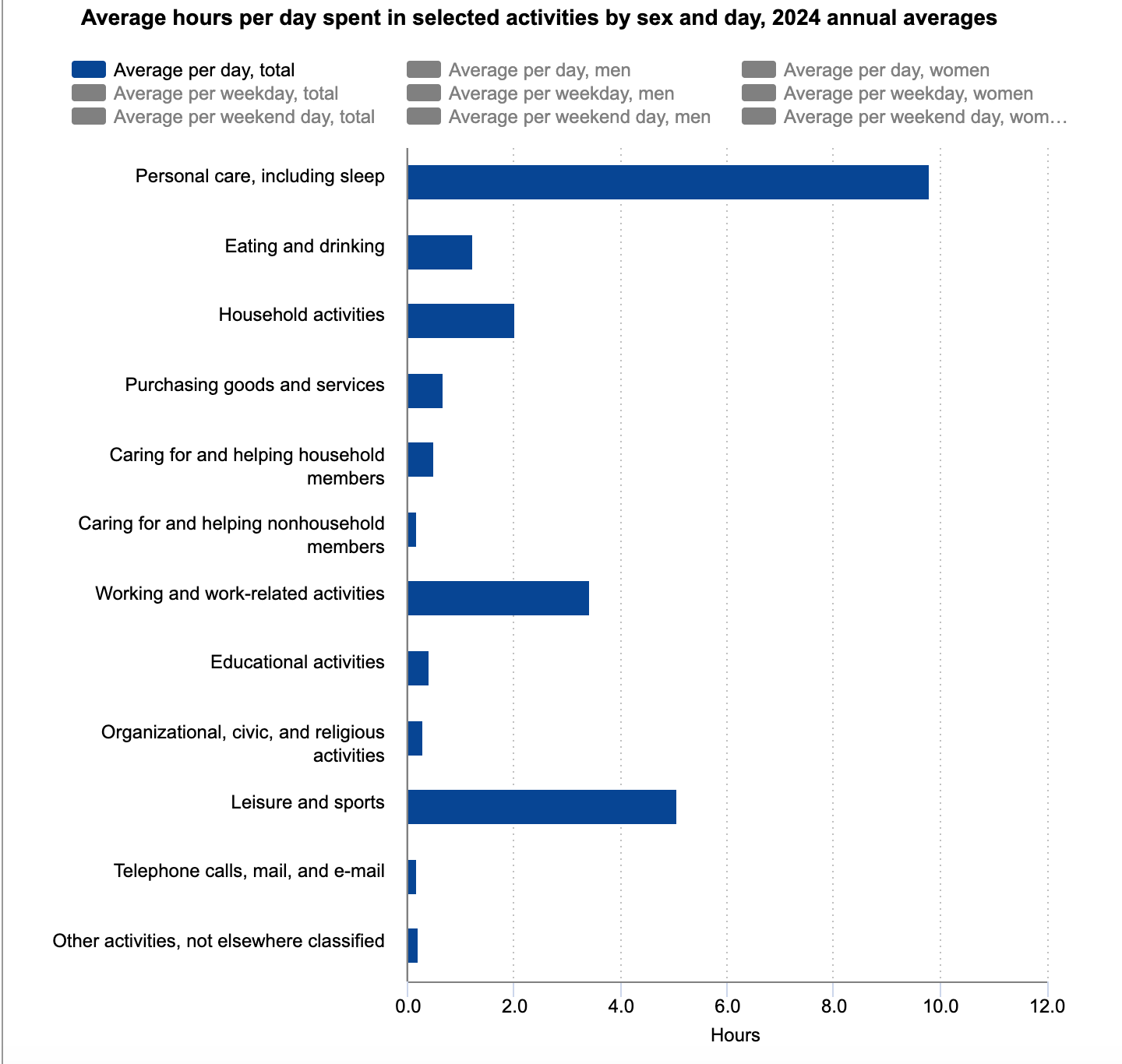
The last few decades have continued to yield progress, with one study finding an additional four to eight hours per week of leisure from 1965 to 2003. Today, according to the latest American Time Use Survey, Americans have over five hours per day of leisure. There are reasons to believe that further technological progress will raise this number; for example, the average American spends 40 minutes per day on food prep and cleanup, but induction ranges—faster and more energy efficient than other cooktops—are gaining in popularity.
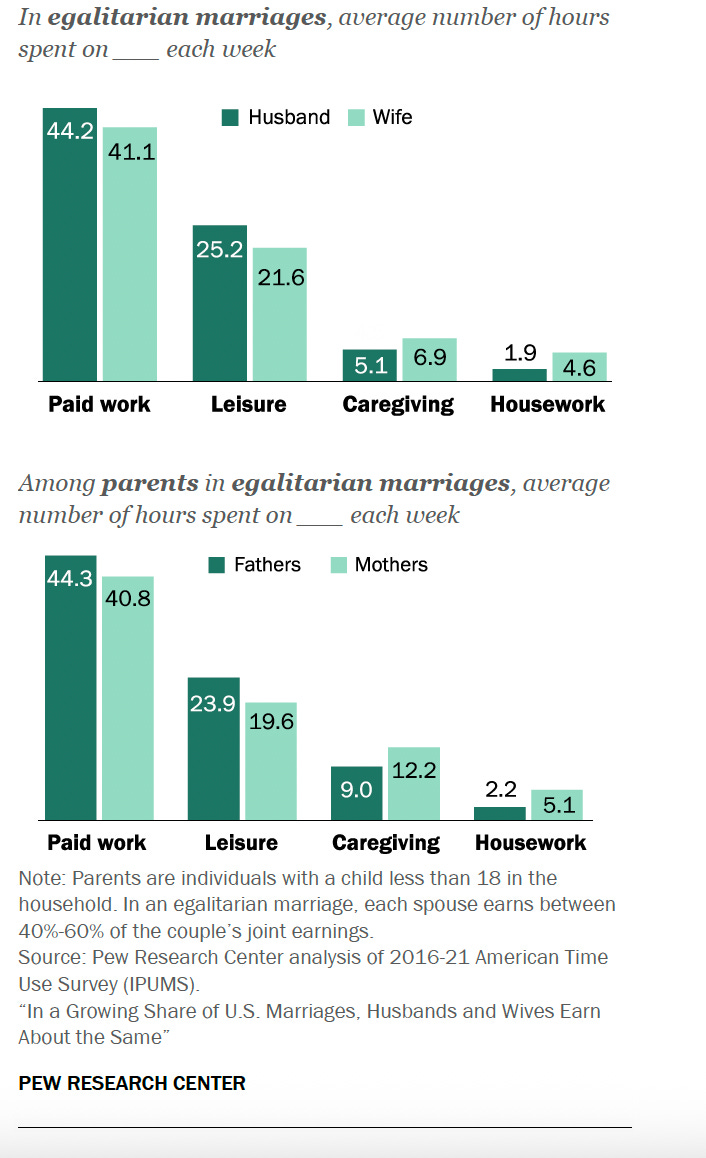
Obviously, this leisure time is not equally distributed. The single parent who works two jobs, the waiter locked out of housing close to his work, the surgeon, all have less time to relax. Gender also plays a significant role here, as women have less leisure time than men in every developed country. Even in marriages where men and women earn similar salaries, men have more leisure time as a result of a higher domestic burden for women.
But while there’s sufficient progress yet to be made, it’s clear that civilization has found a way to expand time, if not master it. I could leave it there, a story of success, of the truism of John Adams’ quote:
I must study politics and war, that our sons may have liberty to study mathematics and philosophy. Our sons ought to study mathematics and philosophy, geography, natural history and naval architecture, navigation, commerce and agriculture in order to give their children a right to study painting, poetry, music, architecture, statuary, tapestry and porcelain.”
Yet, it’s worth devoting a moment to why, exactly, it doesn’t feel as if we have four to five hours of leisure time every day. Most people feel as if they don’t have enough time in the day, sparking movements for more free time, including four day work weeks. My theory is pretty simple: people spend their free time alone on meaningless activities and then are frustrated that they let their leisure time slip away. It’s a position borne from personal experience; I spend less time on my phone than most, but it still eats away at time that I could be spending on other things. With the average person spending over 2 hours a day each on social media and watching TV, that’s a lot of downtime going to waste.
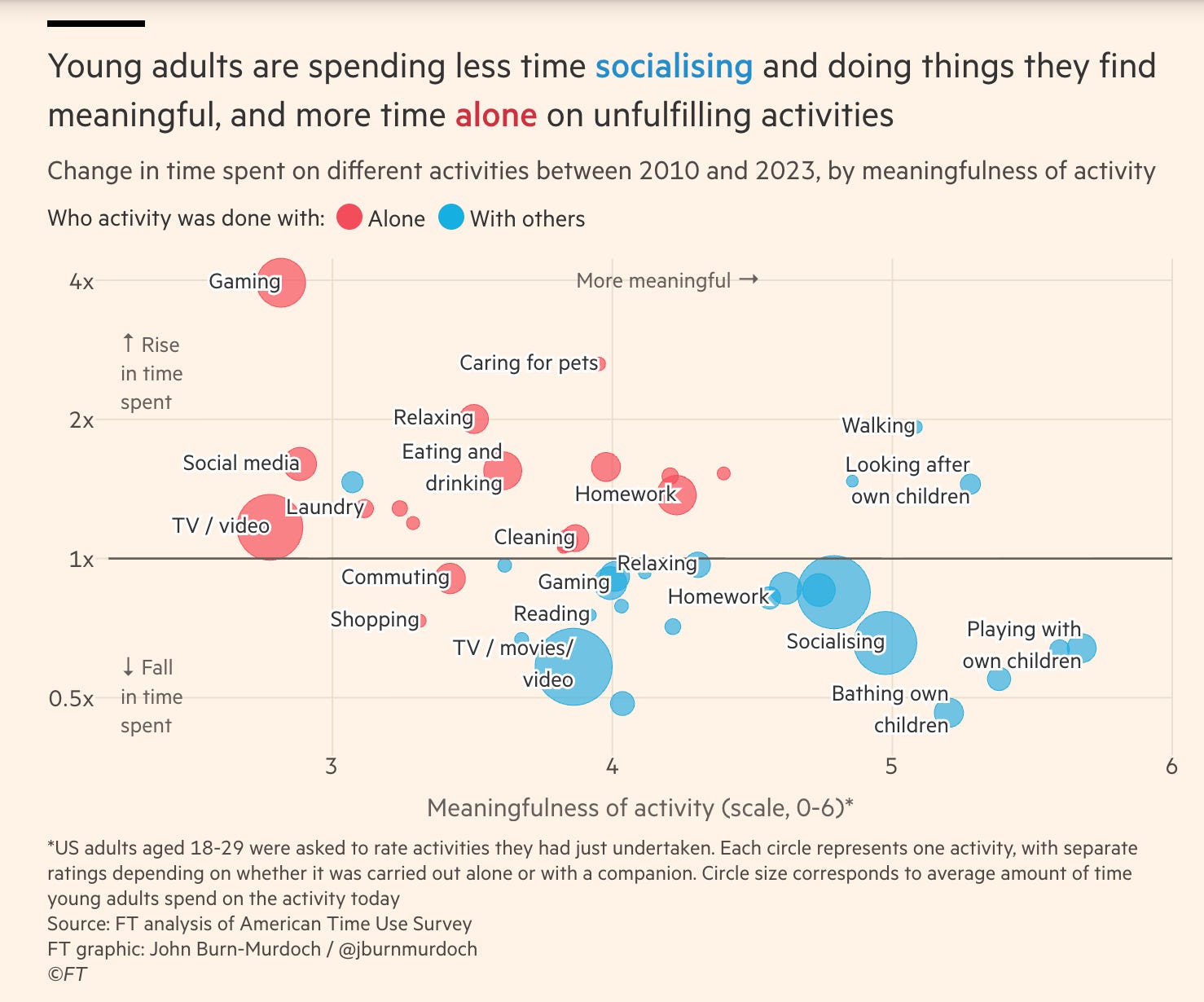
To be clear, this isn’t an argument about productivity; it’s one about purpose.1 As social media has become more algorithmic and videos have eaten up a larger share of the market, the requirements for engagement on the internet have fallen. Intentionality is no longer necessary; I don’t have to seek out the news, it will just pop up naturally in my feed; I don’t have to search for Arsenal highlights, they’ll just appear on my Instagram. Social media has become less about connection and research accumulation and more about the mindless scroll. Leisure, the one domain where a person should have control, is increasingly about being dictated to.
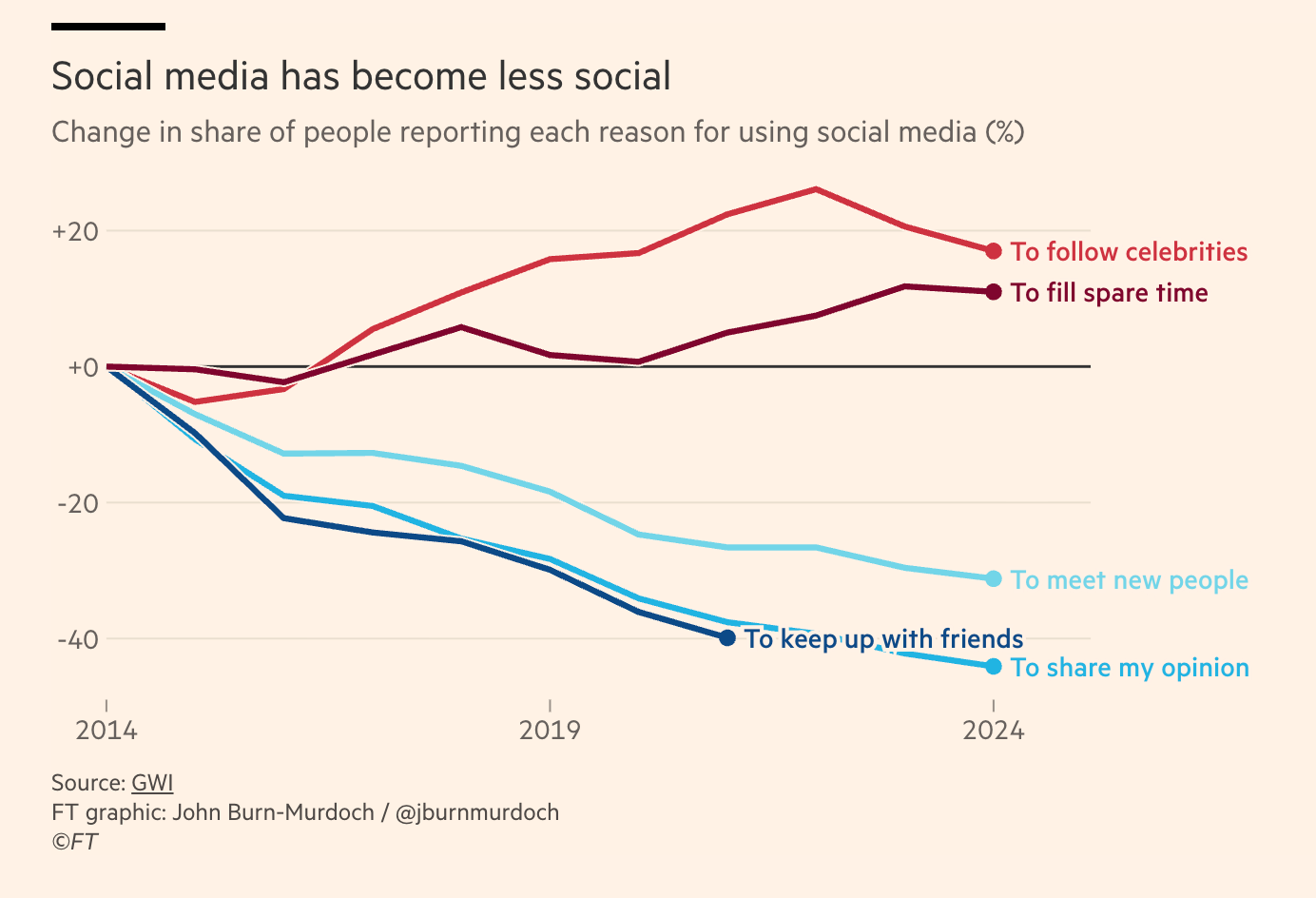
At the same time, people derive more joy from spending time together. As people spend more of their time alone, leisure feels less leisurely, and the perceived time crunch is heightened.
The last few paragraphs may seem dismal, but they’re not dire. Our historically high leisure time is a result of hard-won victories on labor rights, technological advances, and progress on gender equality. Society can always improve, and we should push tirelessly for the next innovations and legislation that frees up more of our time for what we want. But to truly make the most of our hard-earned leisure time requires some personal responsibility. Touch grass, hang with friends, read a book, attend a lecture, go for a run, try painting, learn a language, or write a polemic. You have the time for it.
The irony of me writing an article in my free time about others having free time is not lost on me, but it’s a purposeful act
This is a very good article. Way to find a unique angle that explores media addiction through the context of how much free time we actually have.
In Bowling Alone, Putnam observed that Americans spent nearly all leisure time gains on watching television in the mid/late 20th century. Seems bad!